1、一个人的生命应当这样度过:当他回首往事的时候不会因虚度年华而悔恨,也不会因碌碌无为而羞愧!
2、人的美并不在于外貌、衣服和发式,而在于他的本身,在于他的心。要是人没有心灵的美,我们常常会厌恶他漂亮的外表。
3、当一个人身体健康、充满青春活力的时候,坚强是比较简单和容易做到的事,只有生活像铁环一样把你紧紧箍住时,坚强才是光荣的业绩!
4、任何人都无权糟蹋自己的健康。
维-苏-奈保尔诺贝尔 获奖感言
Two Worlds Sir V. S. Naipaul
This is unusual for me. I have given readings and not lectures. I have told people who ask for lectures that I have no lecture to give. And that is true. It might seem strange that a man who has dealt in words and emotions and ideas for nearly fifty years shouldn't have a few to spare, so to speak. But everything of value about me is in my books. Whatever extra there is in me at any given moment isn't fully formed. I am hardly aware of it; it awaits the next book. It will – with luck – come to me during the actual writing, and it will take me by surprise. That element of surprise is what I look for when I am writing. It is my way of judging what I am doing – which is never an easy thing to do.
Proust has written with great penetration of the difference between the writer as writer and the writer as a social being. You will find his thoughts in some of his essays in Against Sainte-Beuve, a book reconstituted from his early papers.
The nineteenth-century French critic Sainte-Beuve believed that to understand a writer it was necessary to know as much as possible about the exterior man, the details of his life. It is a beguiling method, using the man to illuminate the work. It might seem unassailable. But Proust is able very convincingly to pick it apart. "This method of Sainte-Beuve," Proust writes, "ignores what a very slight degree of self-acquaintance teaches us: that a book is the product of a different self from the self we manifest in our habits, in our social life, in our vices. If we would try to understand that particular self, it is by searching our own bosoms, and trying to reconstruct it there, that we may arrive at it."
Those words of Proust should be with us whenever we are reading the biography of a writer - or the biography of anyone who depends on what can be called inspiration. All the details of the life and the quirks and the friendships can be laid out for us, but the mystery of the writing will remain. No amount of documentation, however fascinating, can take us there. The biography of a writer – or even the autobiography – will always have this incompleteness.
Proust is a master of happy amplification, and I would like to go back to Against Sainte-Beuve just for a little. "In fact," Proust writes, "it is the secretions of one's innermost self, written in solitude and for oneself alone that one gives to the public. What one bestows on private life - in conversation...or in those drawing-room essays that are scarcely more than conversation in print – is the product of a quite superficial self, not of the innermost self which one can only recover by putting aside the world and the self that frequents the world."
When he wrote that, Proust had not yet found the subject that was to lead him to the happiness of his great literary labour. And you can tell from what I have quoted that he was a man trusting to his intuition and waiting for luck. I have quoted these words before in other places. The reason is that they define how I have gone about my business. I have trusted to intuition. I did it at the beginning. I do it even now. I have no idea how things might turn out, where in my writing I might go next. I have trusted to my intuition to find the subjects, and I have written intuitively. I have an idea when I start, I have a shape; but I will fully understand what I have written only after some years.
I said earlier that everything of value about me is in my books. I will go further now. I will say I am the sum of my books. Each book, intuitively sensed and, in the case of fiction, intuitively worked out, stands on what has gone before, and grows out of it. I feel that at any stage of my literary career it could have been said that the last book contained all the others.
It's been like this because of my background. My background is at once exceedingly simple and exceedingly confused. I was born in Trinidad. It is a small island in the mouth of the great Orinoco river of Venezuela. So Trinidad is not strictly of South America, and not strictly of the Caribbean. It was developed as a New World plantation colony, and when I was born in 1932 it had a population of about 400,000. Of this, about 150,000 were Indians, Hindus and Muslims, nearly all of peasant origin, and nearly all from the Gangetic plain.
This was my very small community. The bulk of this migration from India occurred after 1880. The deal was like this. People indentured themselves for five years to serve on the estates. At the end of this time they were given a small piece of land, perhaps five acres, or a passage back to India. In 1917, because of agitation by Gandhi and others, the indenture system was abolished. And perhaps because of this, or for some other reason, the pledge of land or repatriation was dishonoured for many of the later arrivals. These people were absolutely destitute. They slept in the streets of Port of Spain, the capital. When I was a child I saw them. I suppose I didn't know they were destitute – I suppose that idea came much later – and they made no impression on me. This was part of the cruelty of the plantation colony.
I was born in a small country town called Chaguanas, two or three miles inland from the Gulf of Paria. Chaguanas was a strange name, in spelling and pronunciation, and many of the Indian people – they were in the majority in the area – preferred to call it by the Indian caste name of Chauhan.
I was thirty-four when I found out about the name of my birthplace. I was living in London, had been living in England for sixteen years. I was writing my ninth book. This was a history of Trinidad, a human history, trying to re-create people and their stories. I used to go to the British Museum to read the Spanish documents about the region. These documents - recovered from the Spanish archives - were copied out for the British government in the 1890s at the time of a nasty boundary dispute with Venezuela. The documents begin in 1530 and end with the disappearance of the Spanish Empire.
I was reading about the foolish search for El Dorado, and the murderous interloping of the English hero, Sir Walter Raleigh. In 1595 he raided Trinidad, killed all the Spaniards he could, and went up the Orinoco looking for El Dorado. He found nothing, but when he went back to England he said he had. He had a piece of gold and some sand to show. He said he had hacked the gold out of a cliff on the bank of the Orinoco. The Royal Mint said that the sand he asked them to assay was worthless, and other people said that he had bought the gold beforehand from North Africa. He then published a book to prove his point, and for four centuries people have believed that Raleigh had found something. The magic of Raleigh's book, which is really quite difficult to read, lay in its very long title: The Discovery of the Large, Rich, and Beautiful Empire of Guiana, with a relation of the great and golden city of Manoa (which the Spaniards call El Dorado) and the provinces of Emeria, Aromaia, Amapaia, and other countries, with their rivers adjoining. How real it sounds! And he had hardly been on the main Orinoco.
And then, as sometimes happens with confidence men, Raleigh was caught by his own fantasies. Twenty-one years later, old and ill, he was let out of his London prison to go to Guiana and find the gold mines he said he had found. In this fraudulent venture his son died. The father, for the sake of his reputation, for the sake of his lies, had sent his son to his death. And then Raleigh, full of grief, with nothing left to live for, went back to London to be executed.
The story should have ended there. But Spanish memories were long - no doubt because their imperial correspondence was so slow: it might take up to two years for a letter from Trinidad to be read in Spain. Eight years afterwards the Spaniards of Trinidad and Guiana were still settling their scores with the Gulf Indians. One day in the British Museum I read a letter from the King of Spain to the governor of Trinidad. It was dated 12 October 1625.
"I asked you," the King wrote, "to give me some information about a certain nation of Indians called Chaguanes, who you say number above one thousand, and are of such bad disposition that it was they who led the English when they captured the town. Their crime hasn't been punished because forces were not available for this purpose and because the Indians acknowledge no master save their own will. You have decided to give them a punishment. Follow the rules I have given you; and let me know how you get on."
What the governor did I don't know. I could find no further reference to the Chaguanes in the documents in the Museum. Perhaps there were other documents about the Chaguanes in the mountain of paper in the Spanish archives in Seville which the British government scholars missed or didn't think important enough to copy out. What is true is that the little tribe of over a thousand – who would have been living on both sides of the Gulf of Paria – disappeared so completely that no one in the town of Chaguanas or Chauhan knew anything about them. And the thought came to me in the Museum that I was the first person since 1625 to whom that letter of the king of Spain had a real meaning. And that letter had been dug out of the archives only in 1896 or 1897. A disappearance, and then the silence of centuries.
We lived on the Chaguanes' land. Every day in term time - I was just beginning to go to school – I walked from my grandmother's house – past the two or three main-road stores, the Chinese parlour, the Jubilee Theatre, and the high-smelling little Portuguese factory that made cheap blue soap and cheap yellow soap in long bars that were put out to dry and harden in the mornings – every day I walked past these eternal-seeming things – to the Chaguanas Government School. Beyond the school was sugar-cane, estate land, going up to the Gulf of Paria. The people who had been dispossessed would have had their own kind of agriculture, their own calendar, their own codes, their own sacred sites. They would have understood the Orinoco-fed currents in the Gulf of Paria. Now all their skills and everything else about them had been obliterated.
The world is always in movement. People have everywhere at some time been dispossessed. I suppose I was shocked by this discovery in 1967 about my birthplace because I had never had any idea about it. But that was the way most of us lived in the agricultural colony, blindly. There was no plot by the authorities to keep us in our darkness. I think it was more simply that the knowledge wasn't there. The kind of knowledge about the Chaguanes would not have been considered important, and it would not have been easy to recover. They were a small tribe, and they were aboriginal. Such people - on the mainland, in what was called B.G., British Guiana – were known to us, and were a kind of joke. People who were loud and ill-behaved were known, to all groups in Trinidad, I think, as warrahoons. I used to think it was a made-up word, made up to suggest wildness. It was only when I began to travel in Venezuela, in my forties, that I understood that a word like that was the name of a rather large aborginal tribe there.
There was a vague story when I was a child - and to me now it is an unbearably affecting story – that at certain times aboriginal people came across in canoes from the mainland, walked through the forest in the south of the island, and at a certain spot picked some kind of fruit or made some kind of offering, and then went back across the Gulf of Paria to the sodden estuary of the Orinoco. The rite must have been of enormous importance to have survived the upheavals of four hundred years, and the extinction of the aborigines in Trinidad. Or perhaps – though Trinidad and Venezuela have a common flora – they had come only to pick a particular kind of fruit. I don't know. I can't remember anyone inquiring. And now the memory is all lost; and that sacred site, if it existed, has become common ground.
对不起,超过了10000字,删了好多,全文见下:
http://nobelprize.org/nobel_prizes/literature/laureates/2001/naipaul-lecture-e.html
另
http://nobelprize.org/nobel_prizes/literature/laureates/2001/
这个网站上有很多相关内容,不仅有获奖感言、视频,还有他答谢晚宴的致辞、视频,还有颁奖人的评价。。。Enjoy it...
求:《奈保尔家书》奈保尔 的3000字读后感~
坐公车,从住的家晃悠到报社,翻阅《奈保尔家书》。一本来往于英国牛津与西印度特立尼达的父子书信集。 听父亲讲自己始终热爱的写作生涯。他一直默默无闻,做着报纸的记者编辑工作,却始终热爱文学,热爱写作。他也告诉儿子,不要放任自己默默无闻,但是如果默默无闻了也没关系,只要在做自己的事就可以了。儿子还在牛津,没看到儿子成为作家,没看到自己的小说出版,他就撒手离开。但他对儿子,一直有着不可动摇的信心,并宽仁地说:“不要怕当艺术家。” 儿子早熟地很,从他19岁年纪却能写出如此明透的信就可明了。翻书时,想到大一时和同学们密集的来信。其中有一个是后桌,来的信当时不已为然,直到年后翻阅,方才明白其远比自己成熟,当时想得已深密。这位早熟少年,方向始终明确,成为一名作家。之后他果真做到名满天下,得了诺贝尔文学奖。不过求学的道路不乏阴云,他为神经焦虑症所困扰,为贫困所累。还有哮喘。最主要,是对前途的不确定。 看着这些一来一往的信,早上的公车之旅变的漫长而安宁。所有的感觉,为这穿梭时空的信笺敞开。 愿你的道路漫长。愿我一直怀有勇气。
《奈保尔家书》是2001年诺贝尔文学奖获得者V . S . 奈保尔与其父亲(老奈保尔)和姐姐(卡姆拉)三人之间的通信集。时间起始为1949年至1957年。三个通信者分处三地,奈保尔在英国牛津,老奈保尔在家乡特立尼达(西印度群岛的一个英属岛国),卡姆拉在印度。这不是一本小说,但完全可以当“书信体小说”来阅读。也就是说,这本家书在风格上与我们以往熟知的那些家书(如《傅雷家书》、《曾国藩家书》)是不一样的,它在叙述语言和形式结构上都具备“小说”的诸多元素。除了前面说到的书信体小说,我还认为,它也具备成长小说和家族编年史小说的形态。而且更奇妙的是,作为一部“小说”的《奈保尔家书》,并非作者有预见、有目的的刻意而为。因为事实上,家书的三位作者,从他们开始给对方写第一封信的时候,就只有一个单纯的目的,那就是写信,真实地写信,跟我们所有人写信的目的没什么区别。只是由于写信人的个人因素,即:三人都爱好文学,其中老奈保尔和小奈保尔都立志成为一个作家,他们在写信的时候,自然而然地喜欢呈现细节,喜欢刻画人物,喜欢将身边发生的事件讲述给对方听,无意中便成就了一部由三人共同“累积”而成的“小说”。
如果我们把《奈保尔家书》当成一部“小说”来看待,那么,它也有可以归纳的“故事梗概”:在特立尼达,一个叫奈保尔的中年男人,职业是报纸编辑和记者,业余写写小说,梦想有朝一日成为一名作家。他有七个子女,女儿卡姆拉在印度求学,儿子维多(即V.S.奈保尔)在英国牛津求学。这一家人并不富裕,有时还显得比较拮据。姐弟俩在外求学,靠的是政府资助的奖学金。老奈保尔勤奋工作,承担着供养家庭的责任。在为实现自己的文学梦想而努力的同时,更看出儿子维多身上的文学天赋,希望他将来成为一个大作家。而维多也对此充满自信,野心勃勃地为这一目标做着准备。至于卡姆拉,她除了要完成自己的学业,也像父亲一样,对弟弟维多的作家梦极其重视,时常给予勉励和鞭策。他们频繁地给对方写信,除了表达思恋之情,告知生活讯息之外,更多的是在那种艰难的生存环境中,通过这些书信,彼此支撑,相互安慰。
我是在2001年的诺贝尔文学奖公布之后,才知道奈保尔这个作家的。所以,我最先读到的是他的长篇小说《河湾》,其次是《米格尔街》和《毕斯沃斯先生的房子》。《河湾》开头的一句话(“世界如其所是。人微不足道,人听凭自己微不足道,人在这世界上没有位置。”)就把我吸引了,这句突兀的完全不像小说语言的话,让我为之一震。而这句话结束之后,马上就进入到十分具体的故事讲述,这种突兀的叙述转折,又让我为之一震。从那时起,我对能够以这种方式开始一部小说的作家,对他是如何做到这一点的,以及他经历了怎样的写作过程,就怀抱了十分强烈的兴趣。之后不久,我的朋友韩东在给我的一封电子邮件中,也提到了自己最近正在阅读奈保尔。他提到了《河湾》和《米格尔街》,并尤其推崇《米格尔街》。就我所知,写作朋友中,还有顾前和吉木狼格,对《米格尔街》也是爱不释手,如遇“故交”。这就更让我想要知道,这位仿佛从天外掉进汉语世界的小说家,他打动和启发我们的这些东西,从何而来?以及,它们是怎样修炼而成的?
现在,这本《奈保尔家书》似乎可以解开这些谜团了。至少在我个人来说,这部家书除了让我有阅读“小说”的乐趣之外,也为我再次阅读《米格尔街》及《毕斯沃斯先生的房子》提供了难得的注脚。奈保尔到达英国之后不久,就在给父亲和姐姐的家书中提出让他们给他邮寄香烟的要求,因为英国的香烟卖得很贵。尔后,“寄烟”这一细节反复地在三人的通信中出现,关于寄烟的方法,程序;关于海关对烟草的严格规定和高额的关税,等等。总之,它看上去是一件小事,但又是一件很麻烦的事。而我从“寄烟”这件事的反复纠葛中,生出许多的感慨,其中的一个感慨就是,作家不是在天上修炼而来的,而是在日常生活中磨练而成的。当然,《奈保尔家书》可以引申的意义远远不止于此,只是这篇文章所要求的篇幅,已经不容许我罗嗦下去了。
从1952年开始,奈保尔经常性地陷入抑郁状态,他这样跟父亲分析自己的症状:“我当然知道令我一蹶不振的缘由:孤独,情感交流匮乏。你们应该了解,一个男人不是一段被运送到国外的木头,在上面锯两个凹槽,就当作了接受教育的标志。不,不是这样,他的要求远不止于此,他有感情,他有思想。有些人,哎,他们的所思所感超出常人,因此,他们备受煎熬……”这套理论听起来不陌生,回溯起来它似乎是如奈保尔般事业有成的人事后聊以自负的先见。但不容置疑的是,写下这些话的的确是个艰难而困惑的孩子。他的出路只有两条:一是纯粹的文学艺术世界,二就是父亲和家人。值得注意的是,在儿子一次次流露出这种自命的时候,父亲从来没有加以阻止,哪怕是一点点劝诫都没有,也就是说,他几乎从不试图对儿子的性格做出任何校正,至多做些小小的提醒:“你不再是个两三岁大的黄口小儿了……要学会控制自己的情绪。”
老奈保尔教育子女的方式中最突出的一点(不一定是最好的一点),正如评论家詹姆斯•伍德敏锐指出的那样,“与众多望子成龙的父母不同,他从不让爱子心中承受愧疚之情。”而是从来有求必应,顺水推舟,很少违逆儿子的主见。这看似简单的习惯,实际上却是不易做到的——试想,有哪位家长能够承受一种与儿子完全平等的地位?有哪位家长能在经济拮据的情况下给予孩子以充分信任,不去对他大手大脚的消费行为做些许干涉呢?在特立尼达,奈保尔一家的经济并不宽裕,若不是母亲家有几位有钱的亲戚,父亲很难供养得起七个子女。偏偏这些没文化的亲戚都被奈保尔瞧不起,在英国,能够接济他的近亲远亲无不遭到奈保尔的挖苦和排斥,造成的结果之一,便是在求学生涯的后半程,满欧洲旅游、花钱如流水的奈保尔的生活捉襟见肘,父亲的书信再也不像开始时那样跟他大谈创作,而是家庭的经济状况,谈能够给他多少经济支援——“你必须慎之又慎地对待花钱问题”。从1952年到次年去世,父亲汇款给儿子的频率日益加快,却不见他对不太体恤家庭的儿子有多少埋怨。
但这理应是一种最容易产生的埋怨,因为在常人看来,这种“愧疚”是做子女的理应承受的,否则就是举孝不足。在这位把自己纯然当作儿子的“文友”的父亲的看护下,奈保尔艰难地追求环境的认同和接受,把其间的每一桩骄傲和烦恼、每一次振奋与沉沦实践到底。他从父亲那里得到的看似只是钱和写作上的一点建议,但是,若非父亲有意无意的不介入,奈保尔恐怕无法把自己全然独立的视野维护完整至终。这对于一位很早显露出资质的小说家而言,实是一笔可贵的财富。
老奈保尔猝然去世的那段情节,《奈保尔家书》犹如一本手法老练的小说,只用寥寥四封相关的短信和一封电报打发掉故事的高潮;那封儿子发回家里的电报,则天然地适合扮演“书眼”的角色:“他是我心目中最值得尊敬的人/一切就此终结/我对他感激不尽/振作起来/我爱你们。”对一些批评家认为的奈保尔的最佳作品《抵达之谜》(1987),英国名作家萨尔曼•拉什迪尖锐地指出,这本书里通篇看不到一个“爱”字。对于一个刻意背对阳光,从自己的影子看世界的作家而言,或许也只有《家书》能成为他全部作品中唯一的例外,哪怕它是一本“合著”。(
额。。这是你自己写的么???强大啊、、
我帮你找的,请采纳,谢谢!!!
《如此人世间:奈保尔正传》简介、作者是谁?
《如此人世间:奈保尔正传》 帕特里克·弗伦奇
帕特里克·弗伦奇所著诺贝尔文学奖得主、英籍印裔特里尼达和多巴哥作家VS·奈保尔的官方传记《如此人世间》(The World Is What It Is),进入了本年度英国最重要、也是奖金额最巨之非文学类书奖——萨缪尔·约翰逊奖的决选,有望赢得3万英镑(约合人民币40.9万元)的奖金
。
该书一个多月前在英国出版,引起极大关注,中华读书报第一时间两度刊文详细介绍。它虽贵为官方“正传”,却以罕见的坦诚,展示出一个非同寻常的诺贝尔奖得主形象:自大、不忠,寻花问柳,辣手摧花;对发妻利用,冷落,折磨;对情妇殴打,性虐,奴役,长达二十余年。
本书以大量采访、书信和文档,展现出了一个非同寻常的2001年诺贝尔文学奖得主:自大、不忠,寻花问柳,辣手摧花。昔日好友、美国作家保罗·瑟鲁称该书暴露了奈保尔心中的真魔。
瑟鲁说,弗伦奇的传记如此全面,使得本书更像是一份自恋症研究报告,而非严格意义上的文学传记。“奈保尔的病症成了中心,他的写作则成了点缀。”
把网上资料整理了一下,希望能对你有所帮助!
谁能发一段文字,就是评论人的说说的那种,内容是列举了许多许多奥特曼。
①佐菲奥特曼、初代奥特曼、赛文奥特曼、杰克奥特曼、艾斯奥特曼、泰罗奥特曼、雷欧奥特曼、爱迪奥特曼、阿斯特拉奥特曼、尤迪安奥特曼、博伊奥特曼、乔尼亚斯奥特曼、史考特奥特曼、察克奥特曼、贝斯奥特曼、葛雷奥特曼、帕瓦特奥特曼、哉阿斯奥特曼、迪迦奥特曼、戴拿奥特曼、盖亚奥特曼、阿古茹奥特曼、高斯奥特曼、杰斯提斯奥特曼、雷杰多奥特曼、奈克斯特奥特曼、奈克瑟斯奥特曼、诺亚奥特曼、雷欧斯奥特曼、赛文奥特曼、麦克斯奥特曼、杰诺奥特曼、梦比优斯奥特曼、希卡利奥特曼、赛文X奥特曼、赛罗奥特曼、银河奥特曼、奥特之父、奥特之母、奥特之王等40位奥特曼觉得很赞。
②专业维修核潜艇,回收二手航母,大修核反应堆,拆洗航空发动机,航天飞机保养换三滤,高空作业擦洗卫星,太阳能帆板表面除尘,批发歼10,F22,F35,B2轰炸机,氢弹,原子弹,中子弹,电磁脉冲炸弹,东风全系列,战斧巡航导弹。并提供质子对撞机,提供捕捉反物质粒子技术支持。量大从优,团购7折,秒杀5折,有正规发票。
③宋江,卢俊义,吴用,公孙胜,关胜,林冲,秦明,呼延灼,花荣,柴进,李应,朱仝,鲁智深,武松,董平,张清,杨志,徐宁,索超,戴宗,刘唐,李逵,史进,穆弘,雷横,李俊,阮小二,张横,阮小五,
张顺,阮小七,杨雄,石秀,解珍,
解宝,燕青,朱武,黄信,孙立,宣赞,郝思文,韩滔,彭玘,单廷珪,魏定国,萧让,裴宣,欧鹏,邓飞,
燕顺,杨林,凌振,蒋敬,吕方,郭 盛,安道全,皇甫端,王英,扈三娘,鲍旭,樊瑞,孔明,孔亮,项充,李衮,金大坚,马麟,童威,童猛,孟康,侯健,陈达,杨春,郑天寿,陶宗旺,宋清,乐和,龚旺,丁得孙,穆春,曹正,宋万,杜迁,薛永,施恩,周通,李忠,杜兴,汤隆,邹渊,邹润,朱富,朱贵,蔡福,蔡庆,李立,李云,焦挺,石勇,孙新,顾大嫂,张青,孙二娘,
王定六,郁保四,白胜,时迁,段景柱。
等108人感觉很赞。
④孙悟空、唐僧、猪八戒、沙僧、小白龙 佛教神仙 如来佛祖 观音菩萨文殊菩萨 普贤菩萨 阿难 伽叶 金蝉子 灵吉菩萨 弥勒佛 毗蓝婆菩萨 巨灵神 地藏王菩萨 十八罗汉 斗战胜佛 净坛使者 八部天龙 道教神仙 哪吒三太子 太上老君 太白金星 托塔李天王 玉皇大帝 王母娘娘 二十八宿 二郎神 菩提祖师 寿星 镇元大仙 阎王 昴日星官 嫦娥 千里眼 顺风耳 东海龙王、南海龙王、北海龙王、西海龙王 三清 四大天王 土地爷 赤脚大仙 揭谛 九曜星 大力鬼王 六丁六甲 城隍 福星 禄星 东华帝君 日游神 风婆 推云童子 布雾郎君 雷公 电母 火德星君 水德星君 妖魔鬼怪 混世魔王 平天大圣 复海大圣 混天大圣 移山大圣 通风大圣 驱神大圣 牛魔王 黑风怪 黄风大王 白骨精 黄袍怪 金角大王 银角大王 精细鬼 伶俐虫 九尾狐狸精 乌鸡国假国王 鉄扇公主/罗刹女 红孩儿 虎力大仙 鹿力大仙 羊力大仙 灵感大王 独 角兕大王 六耳猕猴 金鼻白毛老鼠精等12000535476人觉得很赞
⑤苍井空、波多野结衣、武腾兰、吉泽明步、松岛枫、神谷姬、小泽玛莉亚、高树玛丽亚、山本梓、樱树露衣、濑户由衣、树麻里子、星野光、白石瞳、忧木瞳、白石日和、相田桃、浅仓舞、小林瞳、夕树舞子、美穗由纪、小室友里、黑木香、朝冈实岭、美里真里、饭岛爱、北原梨奈、等17438人觉得赞
⑥刘备,关羽,张飞,赵云,马超,诸葛亮,黄忠,魏延,庞统,关平,周仓,廖化,刘封,糜芳,傅士仁,王平,张翼,马谡,孙乾,孟获,刘禅,姜维,蒋琬,马岱,夏侯霸,严颜,徐庶,糜夫人,关兴,张苞,马良,伊籍,诸葛瞻,诸葛尚,傅俭,沙摩柯,曹操,曹丕,曹植,曹真,曹昂,曹安民,曹髦,曹芳,夏侯渊,徐晃,张辽,许褚,典韦,夏侯惇,张颌,司马懿,司马昭,司马师,司马炎,庞德,荀賎,郭嘉,李典,乐进,曹洪,邓艾,钟会,曹仁,荀攸,程立,李恢,杨修,郭淮,文聘,焦触,于禁,孙权,孙策,孙坚,黄盖,甘宁,周瑜,程普,韩当,太史慈,周泰,吕蒙,陆逊,朱然,潘璋,马忠,陈武,董袭,张昭,潍翻,鲁肃,丁奉,凌统,孙尚香,董卓,吕布,貂蝉,高顺,陈宫,宋宪,魏续,李儒,袁绍,袁尚,袁术,袁熙,颜良文丑,高览,田丰,审配,刘表,刘琦,蔡瑁,张允,霍骏,黄祖,吕公,马腾,韩遂,马铁,何进,张角,张梁,张宝,管亥,汉献帝,华佗,董承,刘璋,张鲁,杨松,张松,吴懿,张绣,贾诩,张任,杨柏,陆抗,王允等200人觉得很赞
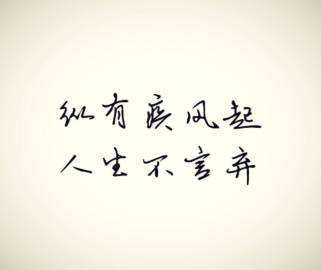
纵有疾风起人生不言弃的下句
1,“纵有疾风起,人生不言弃 。”其下句是“风起云涌时,奋力求生存。”
2,整句的意思是纵然有猛烈的风刮起,人生也不要轻言放弃。即使是大风刮起,乌云涌上,也要尽自己最大的努力生存下来。用以形容人生的挫折起伏很大,无论遇到什么样的困难和挫折,也不要放弃,应当迎难而上,努力拼搏,力求生存。
3,这句话出自宫崎骏剧场版动画《风雪黄昏》(风立ちぬ),作品原题《风立ちぬ》出自于堀辰雄的小说《风吹了》中引用来自法国诗人保罗·瓦勒里《海滨墓园》的著名诗句,意思是“起风了”。而海报中的宣传词“いざ生きめやも”,则是这句诗的下半句,代表着“唯有努力试着生存”的意思。
扩展资料
日本小说家堀辰雄也曾创作过一本以《风雪黄昏》为题的中篇小说,“纵有疾风起,人生不言弃”这句话是烨伊翻译的,翻译自堀辰雄小说《风吹了》开篇第一句:"风立ちぬ、いざ生きめやも"。
但堀辰雄也不是原作者,他这句话译自法国诗人保尔·瓦雷里《海滨墓园》(Christina Rossetti) 的一句诗,原文是:Le vent se lève, il faut tenter de vivre。
参考资料百度百科-风吹了百度百科-海滨墓园
你为什么要报考这个职位?(这是事业单位的面试题,求教各位给个详细而生动的回答,谢谢)
由于公务员面试追求的公平性,一般不会问这样有可能透露考生信息的题目,如果真这么问了,建议这样回答:
1、先讲讲自己为什么要考公务员。“公务员队伍是一个汇集了全国各地精英的团队,我从小就立志要成为其中一员……”等等把公务员猛夸一通。
2、结合你报考岗位的职责。先去网上查查所报岗位的岗位职责,然后结合岗位特点,介绍自身优势,目的是要告诉考官“我比别人适合这个岗位,希望考官给我这个机会”,如果中间能加几句领导人说过的话就更完美了。
3、表态。如果有幸通过面试,我将怎么怎么样,这个不用我教你了吧。
就这样回答,保证你拿高分。
记得读《钢铁是怎样炼成的》这本书时,主人公保尔-柯察金有一句话:一个人的生命应当是这样度过的,当他回首往事的时候,他不会因为虚度年华而悔恨,也不会因为碌碌无为而羞耻。我认为:人生就在于奋斗,就在于不停的拼搏,最终实现自我价值。具体到这个问题
首先,这跟我长期的职业定位是分不开的。每个人都有自己的职业期望,这是和自身的爱好和兴趣联系在一起的。要看这个职业能不能发挥自身的优势和专业知识。通过7年的法学理论学习,成为一名公务员是我的强烈愿望。而公务员是一个神圣而高尚的职业,代表着国家从事社会公共事务管理,肩负着人民的希望,追求的是公共利益的最大化,它存在的根本目的是为人民服务,为国家服务,同时检察院更是肩负着法律的监督与执行的重任,是人民利益,国家利益的保障,因此成为一名公务员能够实现我的职业理想和社会价值。
@其次,客观上我也具备相应能力,适合书记员这个岗位。我去年在四川省高级人民法院实习,通过法院书记员岗位的实习我基本上了解了公务员岗位的工作作风、工作内容,我发现司法机关的工作作风、氛围非常的适合我,这里有踏实、稳重的良好风气,同时有复杂人际关系,需要具有较强协调能力的人才能适应。而我的知识背景、在法院作书记员的实习经历,工作热情加上在学校担任学生干部期间对组织协调能力的锻炼可以说完全符合检察机关书记员岗位的要求。
e再次,我是一个稳定的人,喜欢做一些稳定的工作,毫无疑问,公务员具备这个特点。在一个稳定的环境中我能够发挥自己的最大潜能,对于我的个人发展是很有利的。
总之,书记员这个岗位要求我要有一个积极稳定的心态,能够奈得住寂寞,拥有一颗细心谨慎的心,这些特质在我的性格特征中都是存在的。因此,如果我能有幸成为一名公务员,我一定会尽快的实现从学校到政府机关、从学生到公务人员的角色转变,做一个合格的人民公仆,更好的服务大家,完成我的职业梦想,实现我的社会价值!谢谢,回答完毕!


